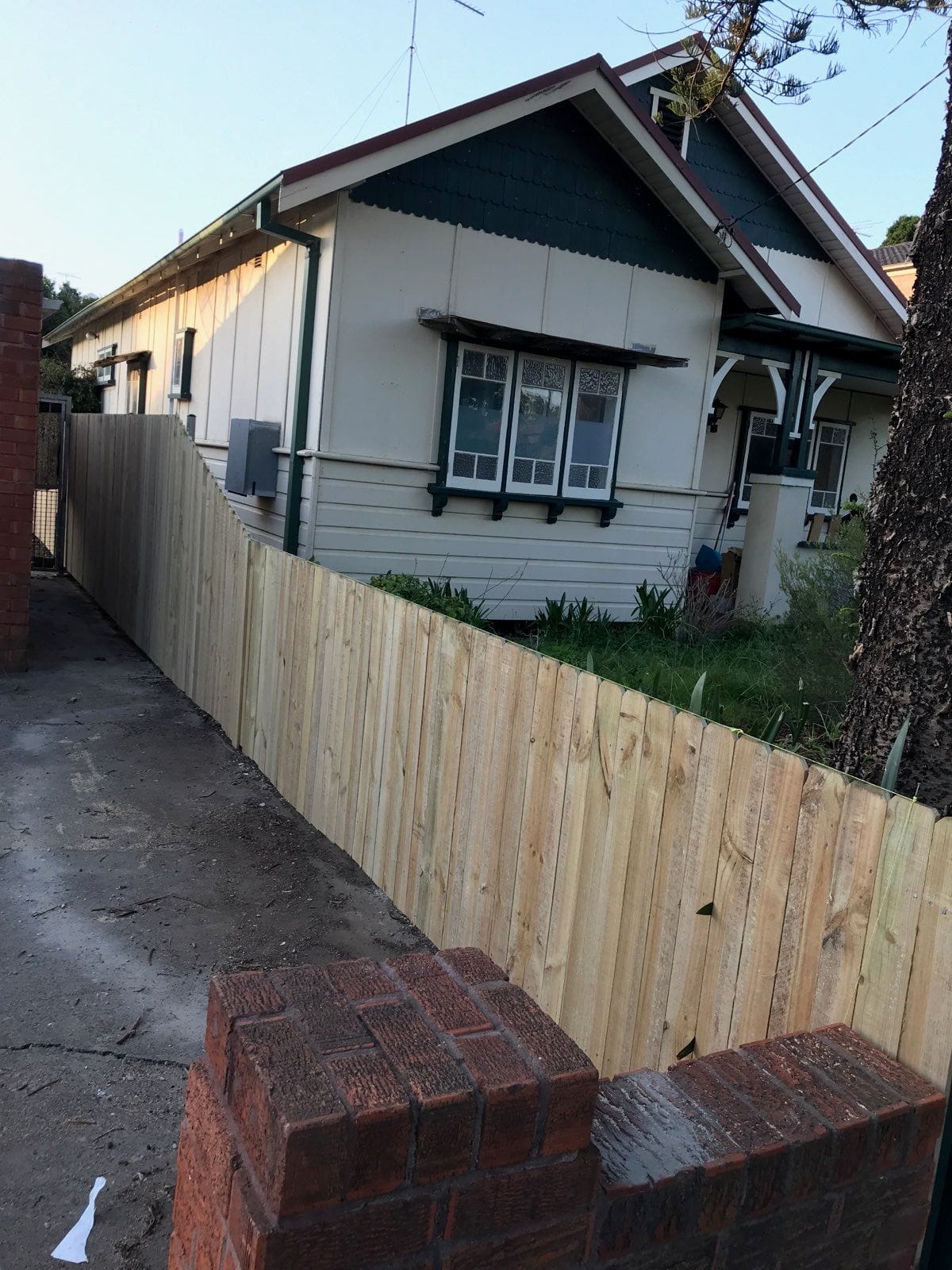
Treated pine
Single Paling
Flat, even paling face. Rails visible on the reverse side.
Full detailsThere is no single best timber fence. There is the one that suits your boundary, the privacy you want and the look you are after. Here are all four, side by side, with no marketing on top.
These are photographs of our own installations, not renders. The difference between the systems is genuinely visible in the face of the fence.
Flat, even paling face. Rails visible on the reverse side.
Full details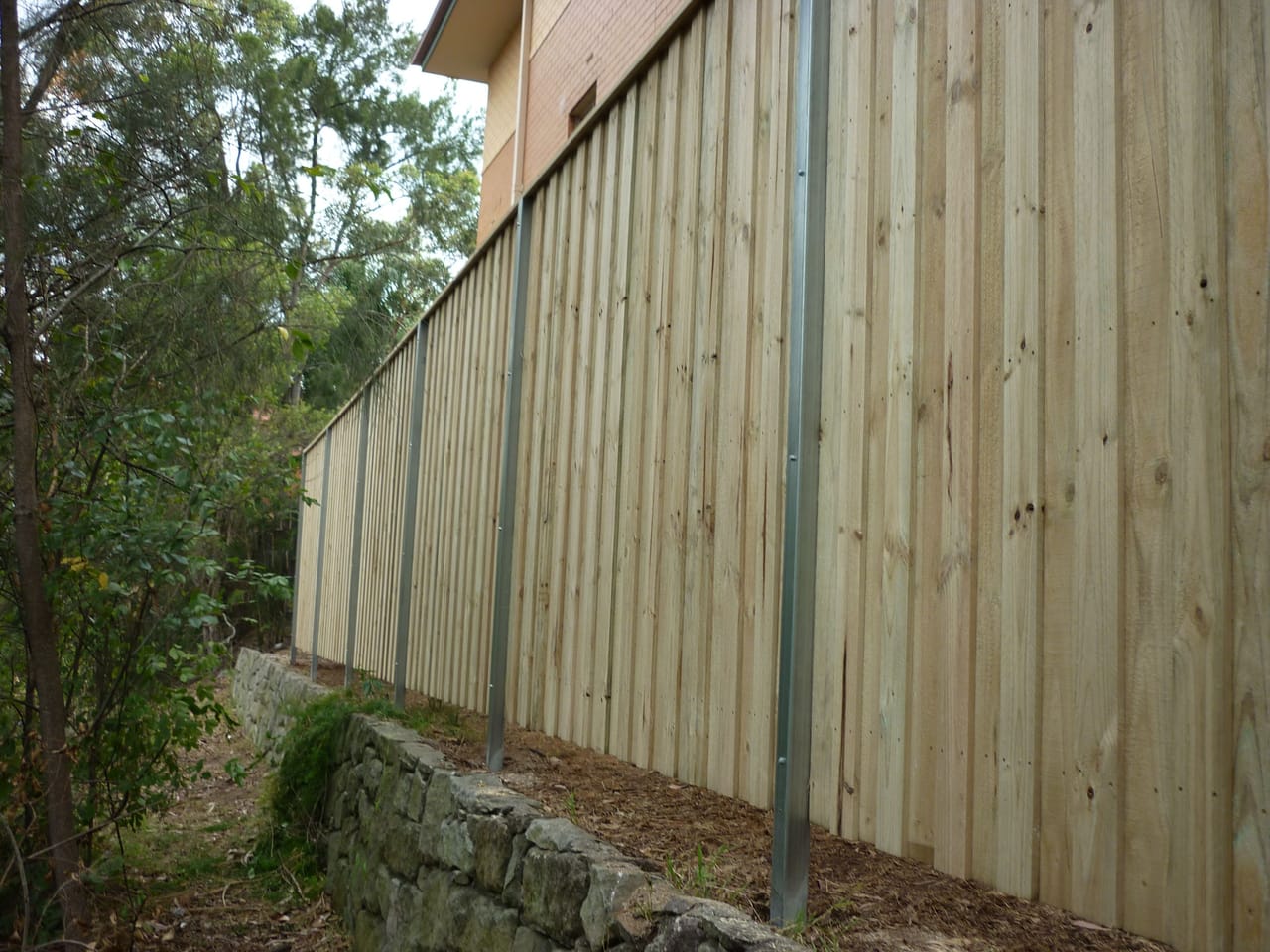
Overlapped palings with a capping rail forming a single clean top line.
Full details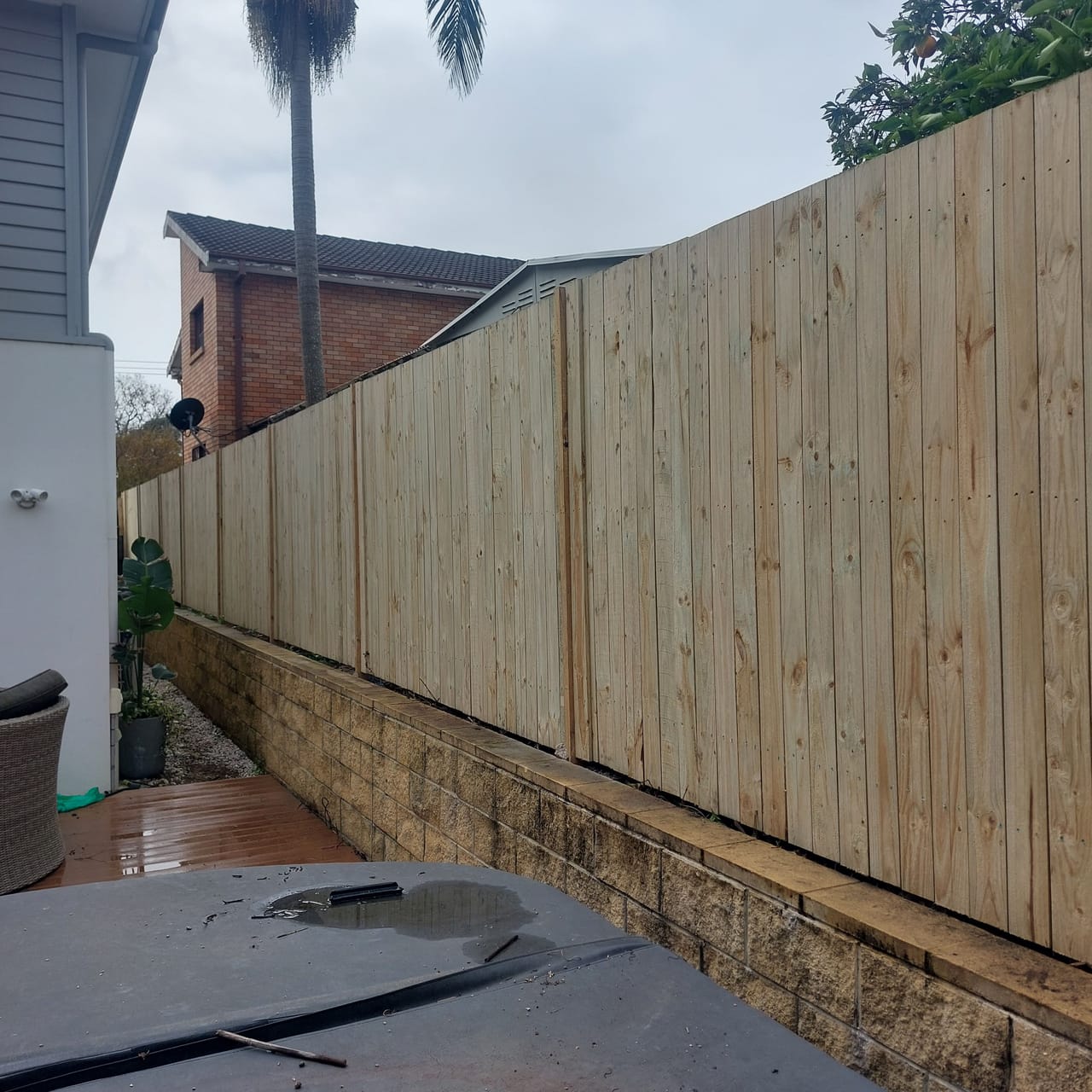
Overlapped palings with the paling tops left as the top line.
Full details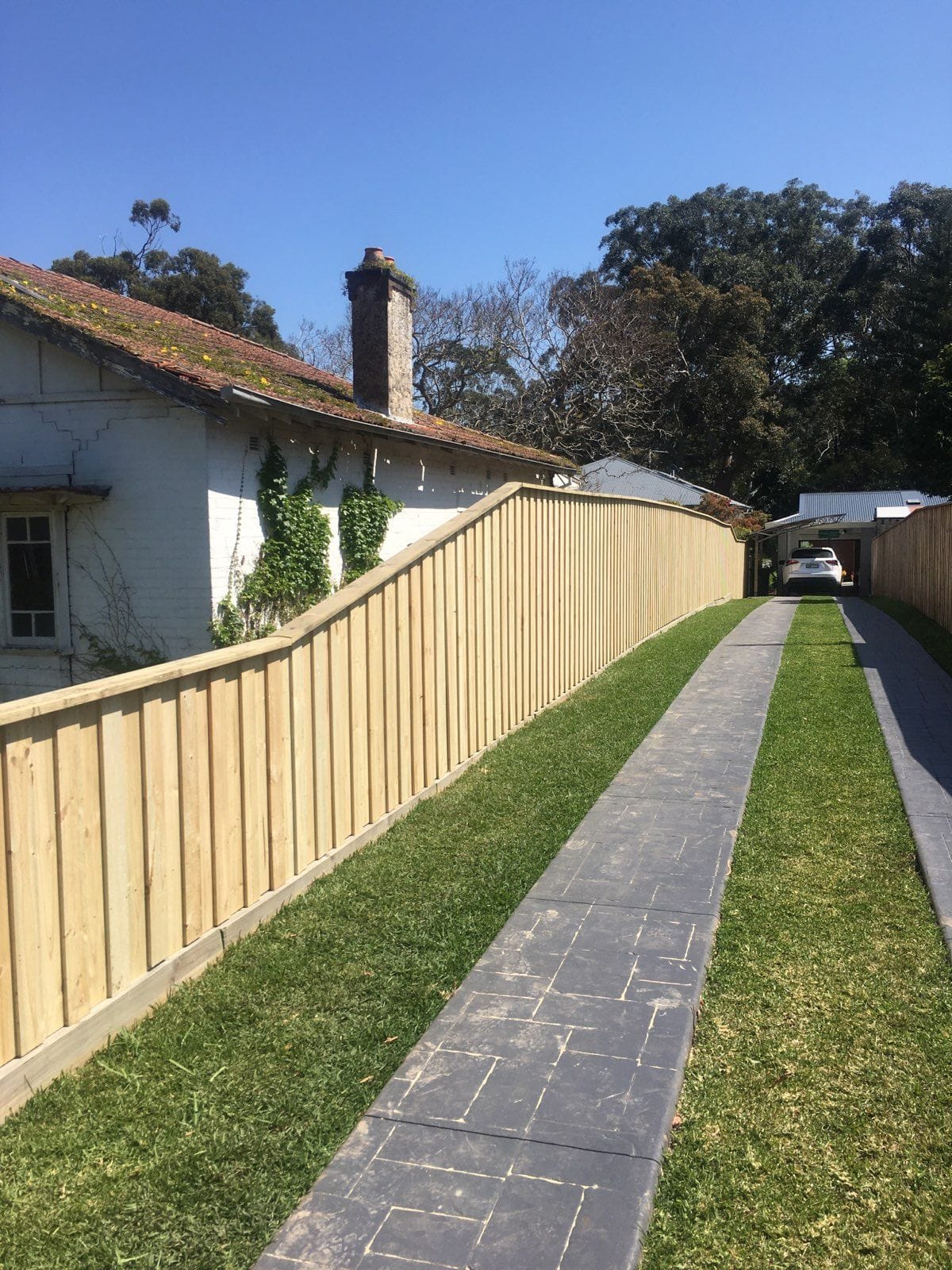
Natural hardwood colour and grain, varying paling to paling. Weathers to grey.
Full detailsEvery claim here describes a characteristic of the system. Nothing in this table is a performance guarantee, because how a timber fence lasts depends on the site, the weather and how it is looked after.
| Characteristic | Single Paling | Lap & Cap | Lapped Only | Hardwood Single Paling |
|---|---|---|---|---|
| Material | Treated pine | Treated pine | Treated pine | Australian hardwood |
| Appearance | Flat, even paling face. Rails visible on the reverse side. | Overlapped palings with a capping rail forming a single clean top line. | Overlapped palings with the paling tops left as the top line. | Natural hardwood colour and grain, varying paling to paling. Weathers to grey. |
| Privacy | Blocks direct view. Joins between palings can move slightly with the weather. | No direct sight line through the face. The most private treated pine option. | No direct sight line through the face, the same as lap and cap. | Blocks direct view. Joins can move slightly, as with any single paling fence. |
| Typical use | The standard Sydney residential side and rear boundary fence. | Privacy boundaries, visible frontages, fences above retaining walls. | Private boundaries where the top of the fence is not a feature. | Properties where hardwood suits the house and landscaping, or replacing hardwood. |
| Gate matching | Pedestrian, single, double and driveway gates built from the same palings. | Gates built lapped and capped so the capping line carries across the opening. | Gates built lapped with paling tops finished to the same line. | Hardwood gates built to match, with hardware sized for the extra weight. |
| Finish | No capping rail. Paling tops are the finished top line. | Capping rail over the paling tops. | No capping rail. Paling tops exposed. | No capping rail. Paling tops are the finished top line. |
| Heights | 1.5m, 1.8m, 2.1m, 2.4m | 1.5m, 1.8m, 2.1m, 2.4m | 1.5m, 1.8m, 2.1m, 2.4m | 1.5m, 1.8m, 2.1m, 2.4m |
| Next step | View Single Paling | View Lap & Cap | View Lapped Only | View Hardwood Single Paling |
Look at lap & cap or lapped only. Overlapping the palings removes the straight-through joins you get on a single paling face.
Single paling treated pine. It is the most common timber boundary fence in Sydney and the simplest to repair one paling at a time.
Lap & cap. The capping rail along the top gives the run a defined, deliberate line and covers the paling ends.
Hardwood single paling. More substance and a deeper natural colour, at a higher material cost than treated pine.
Treated pine takes paint and stain well. Any of the three treated pine systems can be coated once the timber is ready.
Pick "unsure — I'd like advice" in the quote form. Jye Fulton will go through the options at the site measure, with your boundary in front of him.
A fence with one layer of vertical timber palings fixed side by side to horizontal rails. The palings sit in a single plane so the face of the fence is flat. It is the most common timber boundary fence in Sydney.
Fencing built from pine that has been pressure treated so it can be used outdoors in the weather and, at the correct treatment level, in the ground. New treated pine has a green or light tan cast that fades as it weathers, and it takes paint and stain well.
A timber fence with overlapping palings and a capping rail along the top. The overlap removes the straight sight line through the face of the fence, and the capping rail gives the run a single clean top line while covering the cut ends of the palings.
A timber fence with overlapping palings and no capping rail. The overlap closes the face of the fence the same way lap and cap does, but the paling tops are left as the finished top line.
Single paling fence construction using Australian hardwood palings instead of treated pine. Hardwood is denser and heavier than pine, with more variation in colour and grain, and it weathers to a grey silver if left uncoated.
Both overlap the palings, so both close the sight line through the face of the fence. Lap and cap adds a capping rail along the top; lapped only leaves the paling tops exposed as the top line.
A lapped fence, either lapped only or lap and cap. Because the palings overlap, there is no straight gap to see through, and seasonal timber movement does not open up a sight line the way it can on a single paling fence.
It is a different material rather than a straight upgrade. Hardwood is denser, heavier and naturally durable, with more character in the grain, and it costs more. Treated pine is lighter, easier to work and less expensive. Which one suits depends on the property, the look you want and the budget.
Send your boundary details and tick the advice option. We will bring the options to you and quote whichever one you land on.