Specification
Timber fence heights
Height is the specification people are most confident about and most often wrong about, because the number you have in your head is rarely the number that matters on site.
5 min read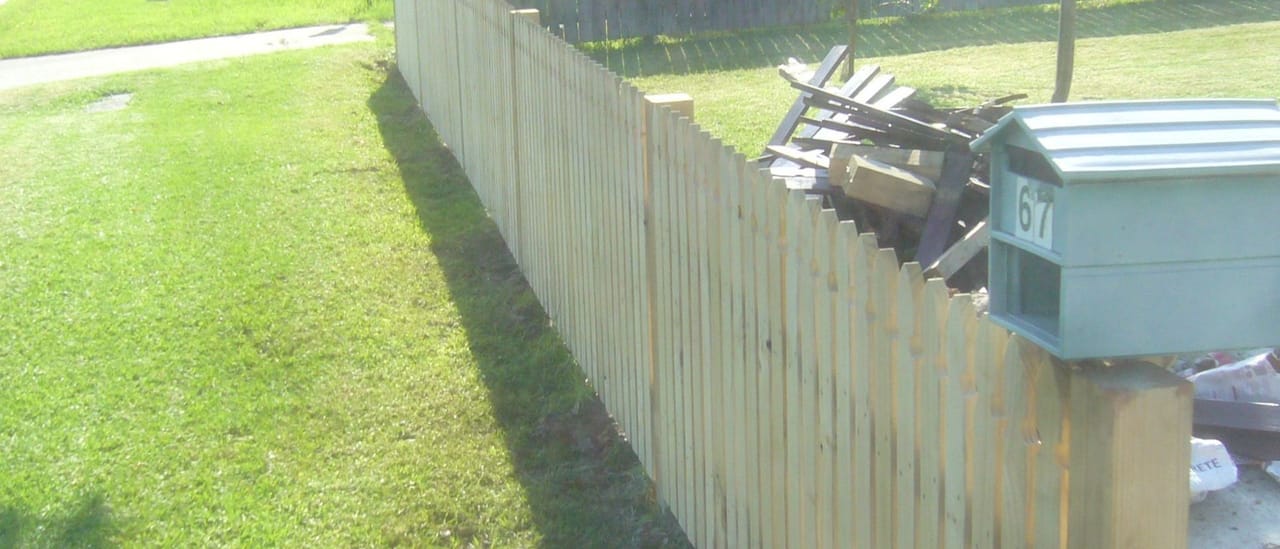
A timber fence looks simple once it is up, which is exactly why a badly built one is so obvious. The line wanders, the top steps unevenly, the posts move within a few years.
Here is what the work actually involves, in the order it happens.
The boundary is walked end to end. Length, height, slope, existing retaining, ground conditions, access and gate positions are all assessed on site.
This is where the real job gets defined, and it is free. It is also where you should raise anything you are unsure about, because decisions are much cheaper before the posts are in.
Where there is an old fence, it comes out first, along with its footings. Both are taken away rather than left on site.
Old brick walls can also be removed and disposed of where that is part of the job.
This step varies more than any other, because old footings range from a shovel of concrete to a substantial block, and some sit exactly where a new post has to go.
Before anything is dug, the line is set out. This is the step that decides whether the finished fence looks deliberate or approximate.
On sloping ground this is also where it is decided whether the fence steps or rakes, and where each step falls. That decision is made on the ground, looking at the actual fall, the house and the neighbouring fences.
Posts carry everything. If the posts are wrong, nothing else saves the fence.
Horizontal rails span between the posts and carry every paling. Rail count follows the finished height, so a 2.4m fence carries more rails than a 1.5m fence.
Gate openings are framed at this stage so the opening and the posts either side can carry the gate.
Palings go on one at a time, fixed to the rails and kept plumb, working to a consistent line along the top.
How they are set out depends on the system: side by side on a single paling fence, overlapping on a lapped or capped fence.
On a lap & cap fence, the capping rail then runs along the top over the paling ends, following the top line including any steps.
Gates are built to match the fence in the same timber and to the same top line, then hung and adjusted.
Adjustment matters. A gate that swings and latches properly on the day it is hung is a gate that has been set up rather than just fitted.
Offcuts, old fencing material and debris are removed from site. A fence job is not finished while the old fence is still stacked on the driveway.
A standard 30 metre timber fence, including demolition and removal of the existing fence, typically takes 1 to 3 days.
Longer runs, difficult access, rock, sloping ground, retaining work and multiple gates all extend that.
Work usually starts within 1 to 2 weeks of a deposit being received, and materials are usually delivered within 2 to 3 days.
Each post is set 600mm deep and secured with at least one full 20kg bag of concrete. Posts can also be filled with concrete up to one third of their length for extra strength.
A standard 30 metre fence, including removing the existing fence, typically takes 1 to 3 days. Access, ground conditions, slope, retaining and gates all affect the actual time.
Work usually starts within 1 to 2 weeks of a deposit being received. Materials are usually delivered within 2 to 3 days.
Yes. The existing fence and its footings are removed and disposed of, and offcuts and debris are cleaned up at the end of the job.
Height is the specification people are most confident about and most often wrong about, because the number you have in your head is rarely the number that matters on site.
5 min readMost timber fencing work in Sydney is replacement, not new. Which means the first real question is not what fence you want, it is whether you actually need a new one.
5 min readWe do not publish per-metre prices, and any timber fencing website that does is quoting a fence it has not seen.
7 min read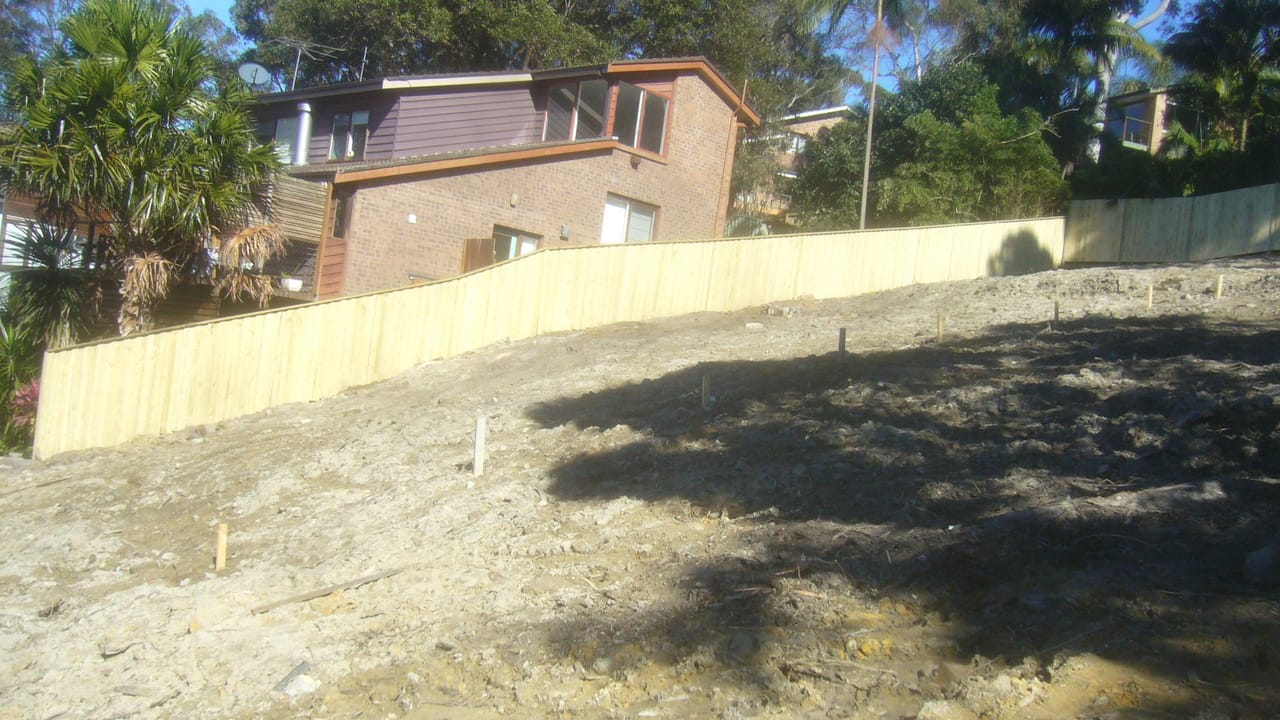
Once you know what you want, Jye Fulton will measure the boundary and quote it. There is no charge for the visit.
NSW Fencing Licence 269038C · ABN 76 612 245 594